Foreigner-Friendly Hospitals in Seoul: English-Speaking Departments & Global Centers (2026 List)
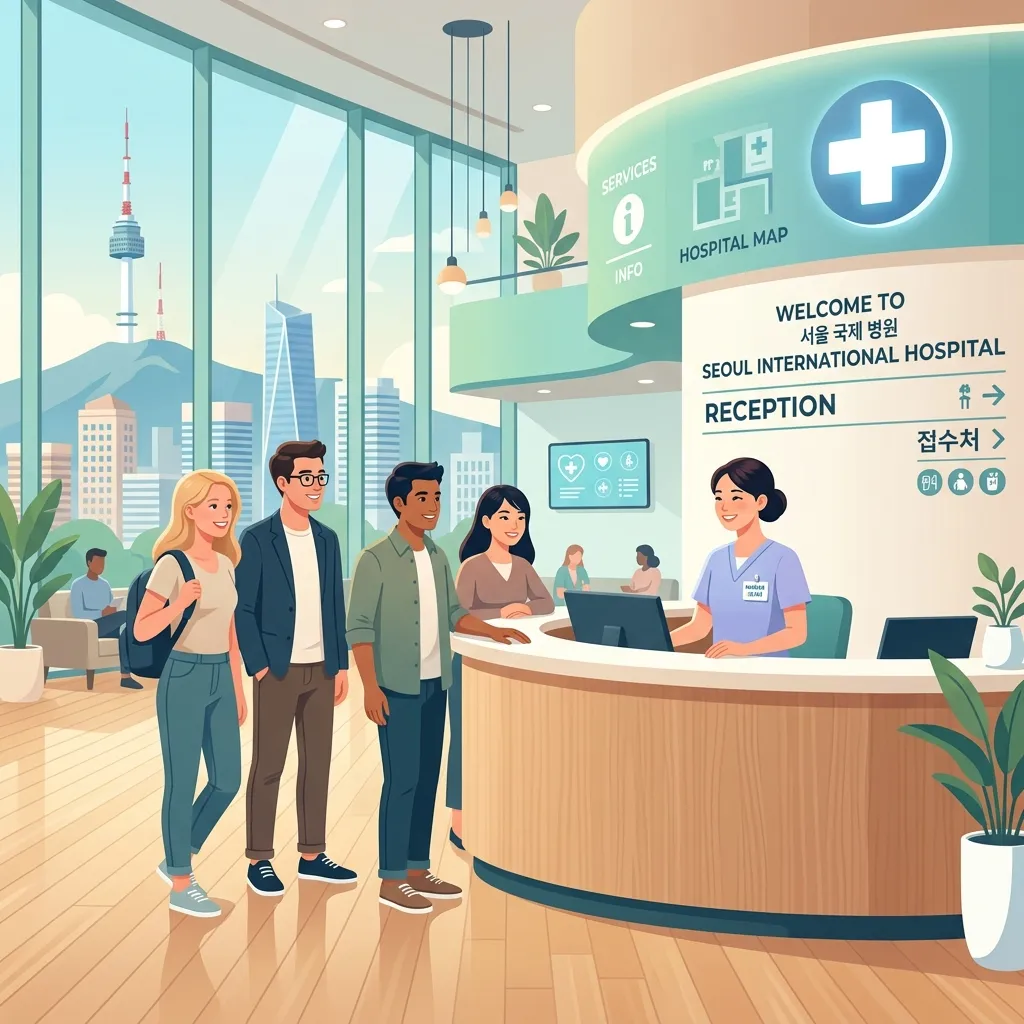
You're running a 39°C fever, your throat feels like sandpaper, and you need a doctor who actually speaks English. Not "maybe someone on staff knows a few phrases" English — real, medical-grade communication where your symptoms don't get lost in translation. After checking with numerous clinics and hospitals across Seoul over the years, I can tell you: knowing which hospitals have dedicated international centers is the single most important healthcare decision you'll make as a foreigner in Korea.
Here's what most people get wrong — they assume every big hospital can handle English-speaking patients smoothly. The reality? There's a massive gap between hospitals with true Gukje-jillyo-senteo (국제진료센터 — International Healthcare Centers) and those that just have a bilingual pamphlet at the front desk.
📌 This article is for general health information only. For symptoms or treatment, always consult a licensed medical professional. In a medical emergency, call 119 immediately.
The Big 5: Seoul's Premier International Healthcare Centers
Seoul's top university hospitals operate dedicated International Healthcare Centers with full-time bilingual coordinators, medical interpreters, and streamlined registration for foreign patients. These aren't just translation desks — they're one-stop departments that handle everything from booking specialist appointments to processing international insurance claims.
I've run the numbers on this myself — the difference between going to a hospital with a proper IHC versus one without is the difference between a 45-minute appointment and a 3-hour ordeal of miscommunication and redundant paperwork. Here's the breakdown of each major center:
| Hospital | Location | Languages | IHC Phone | Key Strengths |
|---|---|---|---|---|
| Severance (Yonsei) | Sinchon | EN, CN, JP, RU, AR | 02-2228-5800 | US Embassy recommended; longest-running IHC |
| SNUH | Jongno-gu | EN, CN, MN, RU, AR, ES | 02-2072-0505 | 6 languages; visa medical exams |
| Samsung Medical | Gangnam-gu | EN, CN, JP, AR, RU | 02-3410-0200 | Cancer center; executive health checks |
| Asan Medical | Songpa-gu | EN, CN, RU, MN | 02-3010-5001 | Korea's largest hospital; organ transplant leader |
| Seoul St. Mary's | Seocho-gu | EN, CN, RU | 02-2258-5745 | Catholic network; 24/7 foreigner ER support |
Severance Hospital consistently ranks as the top pick among expats — and for good reason. Their International Healthcare Center has been operating since the 1980s, giving them decades of experience with foreign patients. The US Embassy in Seoul officially lists Severance as a recommended provider for American citizens (as of May 2026). They handle everything from routine checkups to complex surgeries, with English-speaking coordinators who manage your entire care pathway.
Seoul National University Hospital (SNUH) stands out for the sheer breadth of language support — six languages including Mongolian and Spanish, which is rare among Korean hospitals. Their IHC also handles visa medical examinations and vaccination programs, making it a one-stop destination for new arrivals who need both healthcare and immigration paperwork.
"The International Healthcare Center at SNUH provides one-stop services including appointments, consultations, examinations, payments, and prescriptions for international patients." — Seoul National University Hospital → (as of 2026)
Samsung Medical Center in Gangnam is the go-to for executive health screenings and cancer treatment. Their International Healthcare Center works extensively with international insurance providers and can arrange Guarantee of Payment (GOP) letters directly. If you have a private international plan like Cigna, Aetna, or Bupa, Samsung's IHC is particularly experienced at processing these claims.
The Referral Rule Most Foreigners Don't Know About
Visiting a tertiary hospital without a referral means you pay 100% of costs out of pocket — NHIS won't cover a single won. This is the most expensive mistake foreigners make in the Korean healthcare system, and almost nobody warns you about it upfront.
Korea operates a tiered medical system. The hospitals listed above are all classified as Sanggeubjonghabyeongwon (상급종합병원 — tertiary general hospitals), the highest tier. The Korean government designed the Jinryoeuiryoseo (진료의뢰서 — medical referral form) system to prevent patients from bypassing local clinics and flooding these major hospitals for routine issues.
Here's how the referral process actually works in practice:
Step 1: Visit a local clinic (Uiwon / 의원 — primary care clinic) or general hospital near your home. Describe your symptoms. If the doctor determines you need specialist care, they'll issue a Jinryoeuiryoseo on the spot.
Step 2: Take the referral letter to your chosen tertiary hospital's International Healthcare Center. Present it along with your ARC (Alien Registration Card) at registration.
Step 3: With the referral, NHIS kicks in and you pay only the standard Bonin-budam-geum (본인부담금 — patient copay) of roughly 40-60% for outpatient tertiary care.
There are two critical exceptions. First, emergencies are always exempt — if you go to a hospital ER, no referral is needed regardless of hospital tier. Second, some departments like family medicine or dental may accept walk-ins depending on the hospital's internal policy. Always call the IHC first to confirm.
NHIS vs. International Insurance: How Coverage Works at These Hospitals
If you're enrolled in NHIS, you can use your ARC at any hospital listed above — but the coverage mechanics differ significantly from international private insurance. Understanding which system you're on determines how much you'll actually pay and whether you need to bring cash.
For those on international private insurance (Cigna Global, Allianz Care, Aetna International, etc.), the process is different. Contact the hospital's IHC before your visit and ask two questions: does the hospital have a direct billing agreement with your insurer, and do you need a Guarantee of Payment (GOP) letter? Some hospitals — particularly Samsung Medical Center and Severance — have direct billing arrangements with major international insurers, meaning you won't need to pay upfront. Others require you to pay first and submit receipts for reimbursement later.
If you carry both NHIS and a supplementary Silson-uiryobi-boheom (실손의료비보험 — actual-expense medical indemnity insurance), you're in the best position. NHIS covers 60-70% of the bill, and Silson picks up most of the remaining copay, leaving you with minimal out-of-pocket expenses even at tertiary hospitals.
Finding English-Speaking Neighborhood Clinics
For non-emergency care — colds, skin issues, vaccinations, prescriptions — you don't need a university hospital. English-speaking neighborhood clinics are faster, cheaper, and don't require referrals.
The heaviest concentration of English-friendly clinics clusters around expat-dense neighborhoods. If you live near Itaewon, Hannam-dong, Yongsan, or Gangnam, you'll find internists, dermatologists, and pediatricians who conduct full consultations in English. Many of these clinics specifically advertise to the international community and display bilingual signage.
| Neighborhood | Clinic Density | Best For | How to Find |
|---|---|---|---|
| Itaewon / Hannam | ★★★★★ | General practice, dermatology | Naver Maps: "영어 진료" |
| Gangnam / Apgujeong | ★★★★★ | Dermatology, plastic surgery, dental | Air Doctor app |
| Yongsan / HBC | ★★★★ | Family medicine, pediatrics | Expat community boards |
| Mapo / Hongdae | ★★★ | General practice, ENT | Korea Health Pages |
Two practical tools that save time: the Air Doctor app lets you search for English-speaking doctors by specialty and location, with verified reviews from other foreigners. And NHIS's English portal → lets you check your enrollment status and premium payment history before visiting any clinic.
Emergency Hotlines Every Foreigner Should Save
Save these five numbers in your phone right now — before you ever need them. Korea has a well-organized emergency response system with multilingual support, but knowing which number to call for which situation prevents critical delays.
The BBB Korea service (1588-5644) is the most underrated resource on this list. It's a government-sponsored volunteer interpretation network available 24/7, completely free. If you're at a local clinic where nobody speaks English, call BBB and hand the phone to the doctor — they'll interpret the entire consultation in real time. Having walked through this process myself at a neighborhood clinic in Mapo, I can confirm it works surprisingly well.
"The 1339 call center provides 24-hour medical consultation, hospital location services, and health information for both Korean nationals and foreign residents." — Korea Disease Control and Prevention Agency (KDCA) → (as of 2026)
Frequently Asked Questions
Do I need to book appointments at International Healthcare Centers?
Yes — walk-ins are generally not accepted at IHCs, though the ER is always open. Call the IHC directly or email them at least 2-3 business days before your desired appointment date. SNUH accepts appointment requests via their online portal, email (international@snuh.org), and even KakaoTalk. Samsung Medical Center's IHC processes requests by phone and email. Severance has an online booking system on their English website. In all cases, you'll need to provide your ARC number, a brief description of symptoms, and your insurance information.
What if I don't speak Korean and end up at a hospital without an IHC?
Use BBB Korea (1588-5644) for instant over-the-phone interpretation — it's free and available 24/7. Download the Papago translation app as a backup. In practice, most younger Korean doctors have functional English for basic medical communication. Take a screenshot of your symptoms described in Korean using Papago before you arrive. Many hospitals also have a Tongnyeok Bongsa (통역 봉사 — volunteer interpreter) system, though availability varies by time of day.
Can tourists use these International Healthcare Centers?
Absolutely — IHCs serve both residents and tourists, but tourists pay 100% out of pocket without NHIS. If you have travel insurance, contact the IHC beforehand to check direct billing options. Many tourist-oriented services at Samsung and Severance include comprehensive health screening packages priced in USD, specifically designed for medical tourism visitors. Expect to pay significantly more than insured residents — a routine specialist consultation runs ₩80,000-₩150,000 without any insurance coverage (as of 2026).
How do I get medical records in English from a Korean hospital?
Request English medical records directly through the IHC — most can issue them within 3-5 business days. This service typically costs ₩10,000-₩30,000 per document. For standard documents like Jindan-seo (진단서 — medical certificate) and Chiryo-hwaginseo (치료확인서 — treatment confirmation), the IHC handles the translation internally. For more complex records like surgical reports or pathology results, allow extra processing time. If you need documents for overseas use, ask about Apostille certification — the IHC can guide you through the process.
※ All information is based on 2026 data from the Ministry of Health & Welfare, NHIS, and official hospital websites. Hospital services, IHC hours, and insurance acceptance are subject to change. This is not professional medical advice. In a medical emergency, always call 119 first.
The KR INSIDER editorial team consists of long-term residents, certified tax professionals, and immigration specialists based in Seoul. All content is cross-referenced with official Korean government sources including the NTS, MOEL, and NHIS.